Sebastián Enrique
"They are the last things that ever happened to my body. Nobody has ever asked me about them."
— Beautiful Scars, §1
Origin: The narrator of Beautiful Scars is named after Saint Sebastian.
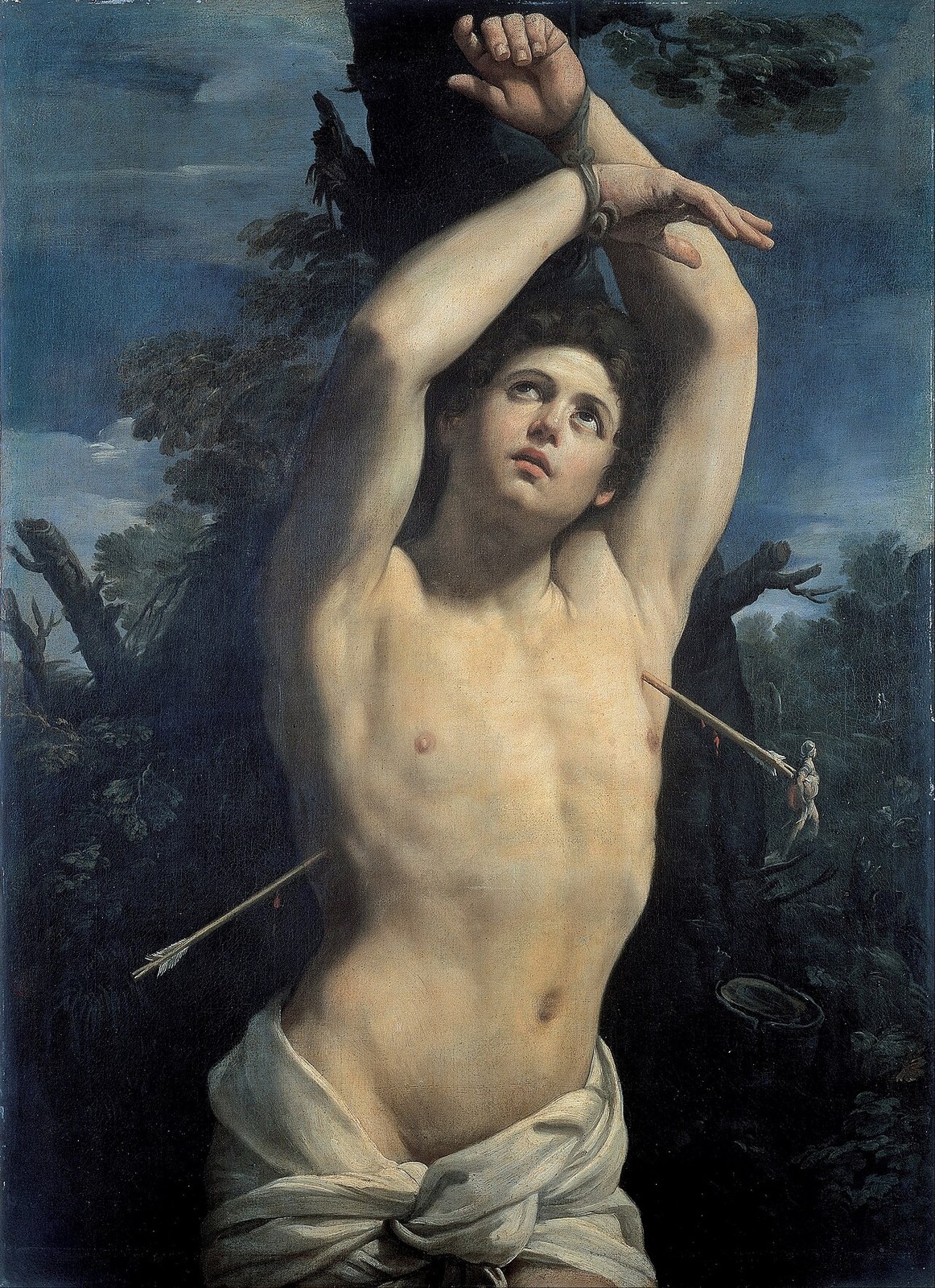
History: Saint Sebastian is a Christian martyr who came from the city of Milan, Italy. Legend says that he was a third-century Roman soldier, an officer of the emperor's guard under Diocletian. While he was serving, the emperor discovered that he was a Christian and, enraged, ordered his death. He was tied to a stake, shot with arrows, and left for dead. Saint Sebastian, however, did not die. A Christian widow and saint named Irene of Rome found him still alive, took him in, and nursed him back to health.
Once healed, instead of fleeing to safety, Saint Sebastian confronted the emperor in public and denounced his cruel treatment of Christians. Infuriated, the emperor had him beaten to death with clubs, and his body was thrown into the Cloaca Maxima, Rome's main sewer. It was later recovered for Christian burial.
By the Renaissance, Saint Sebastian had become one of the most painted figures in Western art: a young man, beautiful, pierced, still standing. A man sentenced to death who survived the arrows.
Which of your scars would you give back, and who would you be without them?