

Today is my daughter’s birthday. She would be turning fifty-two, if she is turning anything at all; I am thirty, and I have been thirty since before she was born.
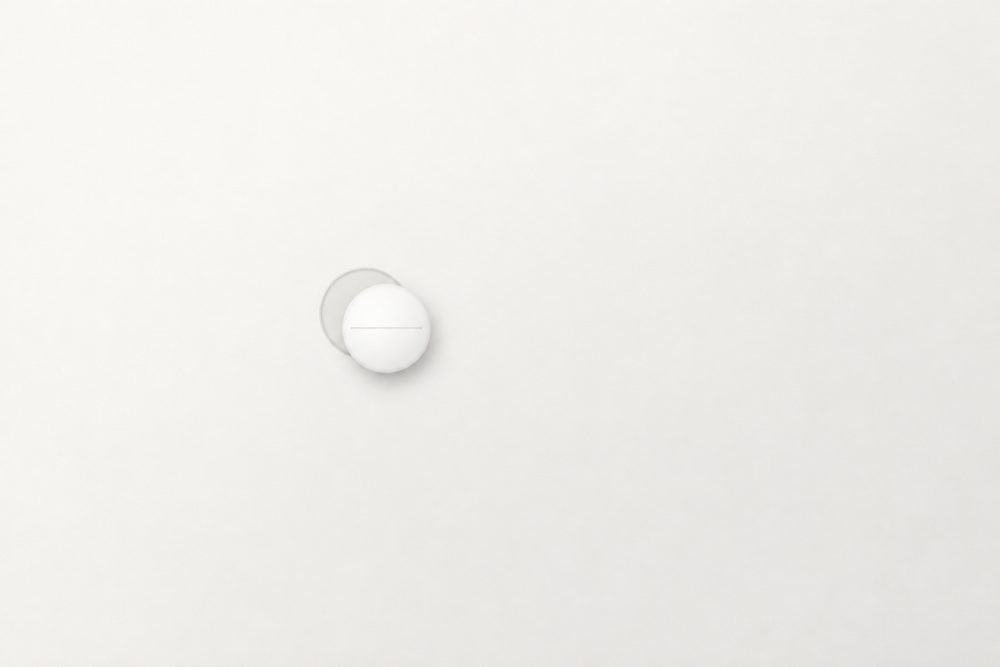
The pill is where it always is, on the left side of the sink, sitting in the pale ring it has worn into the porcelain. It is a perfect little circle, chalk against white, the exact diameter of the tablet — the kind of mark a thing makes when it is set down in the same place every morning for sixty years. I have never tried to scrub it out. I am not certain that it would come out, nor that I want it to be gone.
I wake at a quarter to six, which is the hour I wake, always, no matter the day, and I check the phone anyway to be sure of it, because a man does not entirely trust a thing he has not looked at. Then I lie a while with one foot out from under the sheet, which is how I have slept since I came to Monterrey and learned what its nights are. The house makes four sounds at that hour and I know all of them. The gentle hum that comes from the back of the refrigerator every time the compressor turns on momentarily. The faint swooshing sound of water moving down through pipes buried inside the wall, which lead from the tank on the roof. A tick in the beam over the bedroom that comes when the roof begins to give back what it took in the day, which is at about ten past six in September and later in the year as the year goes on. Under those, the sound of a house in which nobody else is breathing, which is not silence, it is emptiness, and which I could pick out of a hundred houses.
Then I get up.
The bathroom light comes on in two stages, a flicker and then a decision; the tube above the mirror looks older than most of the people in this country. I look at myself while it makes up its mind. There is nothing to see and I look anyway. It is how you check that a door is shut. Black hair with the part on the left, where it has always been. The same three lines across the forehead I had at twenty-nine and will have at four hundred. The small dark spot on the right eyelid that my wife used to say made me look like I was about to disagree with her, which I usually was. The face is the face. It will go on being the face.
I take the pill with water from the tap, which tastes of the pipe, of the mountain, and underneath both of those, of the unmistakable flavor of chlorine. A reminder that nothing is quite what it appears to be on the surface. I brush my teeth with the same rhythm and for the same length of time as the day before, never more, never less. Like most engineers I know, I am methodical. I put the brush back in the glass, beside the ring where the pill was.
My hands do not match my face. They are thick through the palm, short in the finger, heavy at the joint, and the skin across the back of them has the grain of something that has been kept outside. Across the knuckles of the second and third fingers there are two small white marks where the skin came back as something other than skin. There is a third blemish below the little finger, fainter, more of a seam than a mark, which you can only find by turning the hand into the light and looking for it. They are the last things that ever happened to my body. Nobody has ever asked me about them. Nobody looks at anybody’s hands.
I make coffee and drink it standing at the counter, because there is no reason to sit down and there has not been for a long time. The pot is not the one she bought, the one that originally came with the coffeemaker. It was made of glass, was fragile, and destined to be broken in any slip of the hand that could and would eventually occur while washing it. When it finally broke, I replaced the pot with the current one; it is aluminum, which everybody agrees is the wrong material for making coffee. The pot perpetually holds a smell of burnt coffee grounds, and makes coffee that tastes correct to me and would not to anybody else, but it is unbreakable no matter how many times it slips out of my hand while I am washing it. I have replaced the gasket in the machine four times. You can still buy the gasket. There is one shop on Avenida Colón that has them in a drawer, loose, in three sizes. The man there takes them out, sets them on the glass, and lets you choose. Neither of us has ever remarked on the fact that this is the only transaction of its kind left in the city.
At the end of the hall there is a door that stays closed.
Outside, the heat is already in the street, waiting, with the patience of something that has a body. It is the sixth of September. The heat will break in the third week of October, or it will not break until November, and either way nobody will be surprised. Regardless, every man on this block will discuss it every morning as though the matter were still open.
Elías is hosing the cement in front of his house, which he does every morning at this hour and which accomplishes nothing whatsoever — the water is gone off the stone before he has finished coiling the hose — and he raises a hand to ask me about the heat as though I might be carrying information he lacks. I tell him it will be worse tomorrow. In September it is always worse tomorrow, it is always true, and the two of us have been having this conversation for longer than most marriages used to last.
At twenty to seven I leave for the office. It is her birthday, I will not mention it, and there is no one to mention it to.