

Elías
“He said, ya aparecerá. She’ll turn up.”
— Beautiful Scars, §11
Origin: Sebastián’s neighbor carries the name of the prophet Elijah. In Spanish Bibles, Elijah is Elías.
History: In Hebrew the name is Eliyahu: “My God is the Lord.” Elijah was a prophet in the northern kingdom of Israel in the ninth century BC, in the reign of King Ahab. His story is told in the Books of Kings.
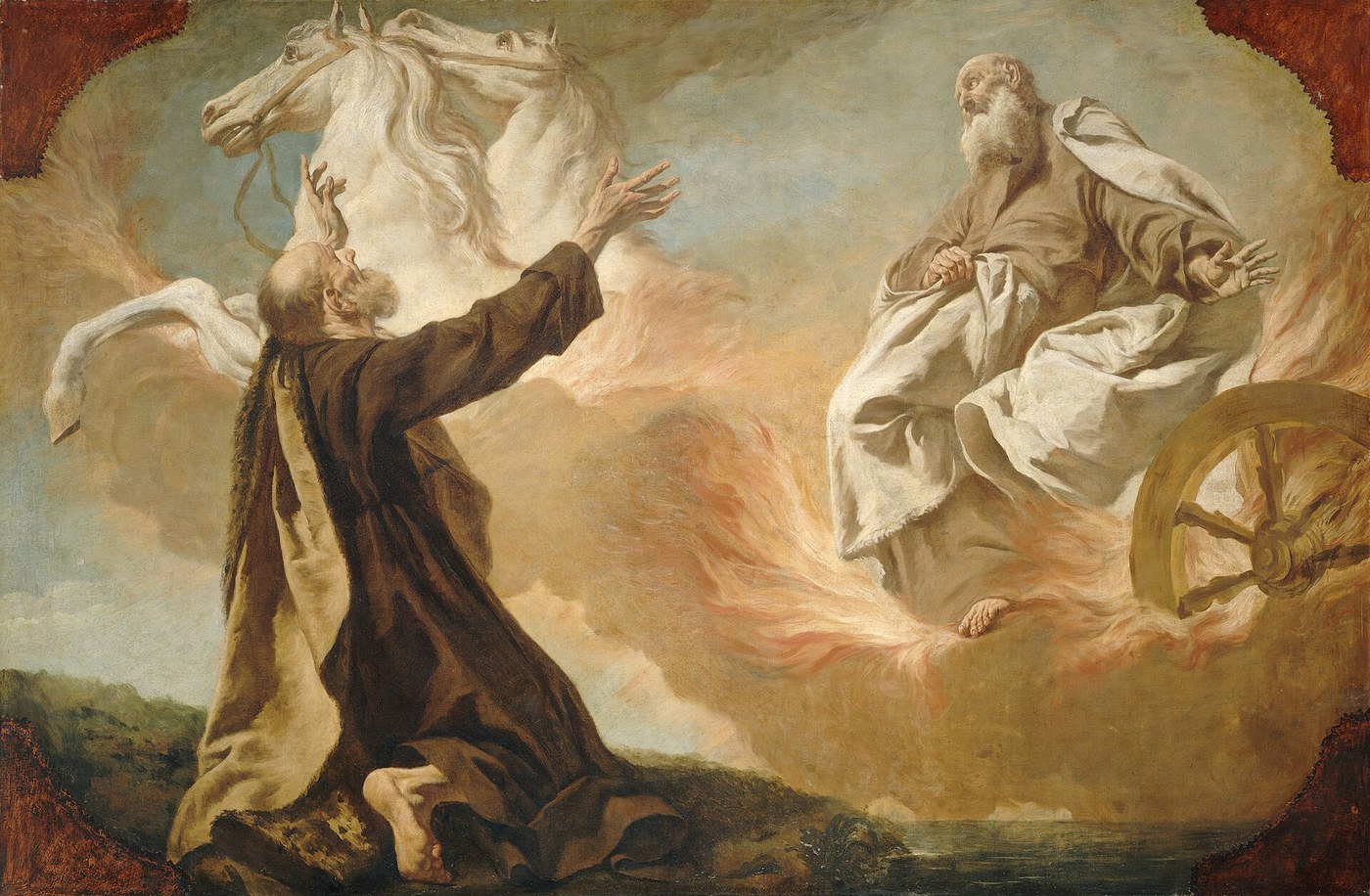
According to the Bible, Elijah never died. The Second Book of Kings tells how a chariot of fire with horses of fire appeared, and Elijah went up by a whirlwind into heaven. Centuries later the prophet Malachi promised his return: “Behold, I will send you Elijah the prophet before the coming of the great and dreadful day of the Lord.”
He is still awaited. At the Passover Seder, Jewish families pour a cup of wine for Elijah. At one point in the meal they open the door of the house so that he may come in.
In the novel, Elías has taught Hebrew at the university for sixty years. Every morning he hoses the cement in front of his house. It is Elías who says the one Hebrew word the book never translates (see The missing word).
Are you living, or only existing?
The next section is intended to be read once you have finished the book.
I’ve finished the bookClose
Elías is there on the first morning of the novel and again near its end, hosing the cement. When Sebastián finally says that he will finish the room at the end of the hall, “este año sí”, Elías answers as he always has: “claro que sí.”
The novel ends at the second window of the Rey del Cabrito, with its last line: “From here you can see the door.”